
For many parking garages, the months ahead are the toughest of the year. In colder regions, freeze-thaw cycles and chlorides from de-icing salts put steady stress on concrete. In coastal areas, salt air keeps working on exposed surfaces in every season. In hurricane-prone regions, the end of storm season is the time to find out what the summer left behind.
Wherever your garages are located, the weeks before winter are a practical window to find small problems while they are still small. Here is what we recommend checking.
Why the Weeks Before Winter Matter
Water is the primary driver of deterioration in most parking garages. When it carries chlorides into the concrete, from de-icing salts or from salt air in coastal areas, it can reach the reinforcing steel and start corrosion. In freezing climates, water trapped in cracks and joints expands as it freezes, widening openings and loosening concrete with each cycle.
A failed joint or open crack in November can become delaminated, spalling concrete by spring. Catching it now usually means a simpler repair, less disruption and a lower cost.
Your Pre-Winter Checklist
1. Expansion joints
Look for seals that are torn, missing or pulling away from the concrete. Check the level below for water staining, active leaks or rust stains along the joint line. Clear debris packed into joints, which can keep seals from moving as designed.
2. Sealants and caulking
Check sealants at control joints, cove joints, around drains and where walls meet the slab. Sealant that is cracked, brittle or separated from the concrete is no longer keeping water out.
3. Traffic coatings and waterproof membranes
Walk the drive lanes, turning areas and ramps, where wear is heaviest. Look for coating worn through to bare concrete, blistering, peeling or areas damaged by vehicles or past snow removal. Exposed concrete on an elevated deck is an open path for water and chlorides.
4. Drains and drainage
Clear leaves, sediment and debris from drains before winter. After the next rain, look for ponding water. In freezing climates, standing water turns to ice, creating a slip hazard and adding to freeze-thaw damage.
5. Cracks and concrete damage
Note any new or widening cracks, spalling, exposed or rusted reinforcing steel and rust staining. Look overhead as well. Delaminated concrete on the underside of slabs and beams carries the risk of falling concrete over drive lanes and walkways, and it should be treated as a safety priority.
6. Signs of structural distress
Watch for signs of post-tension distress, such as cracking along tendon lines, staining at anchorages or tendons pushing out at slab edges. Where structural concerns are identified, evaluation by a licensed professional engineer should guide the repair approach and timing.
7. Snow and ice plans (colder regions)
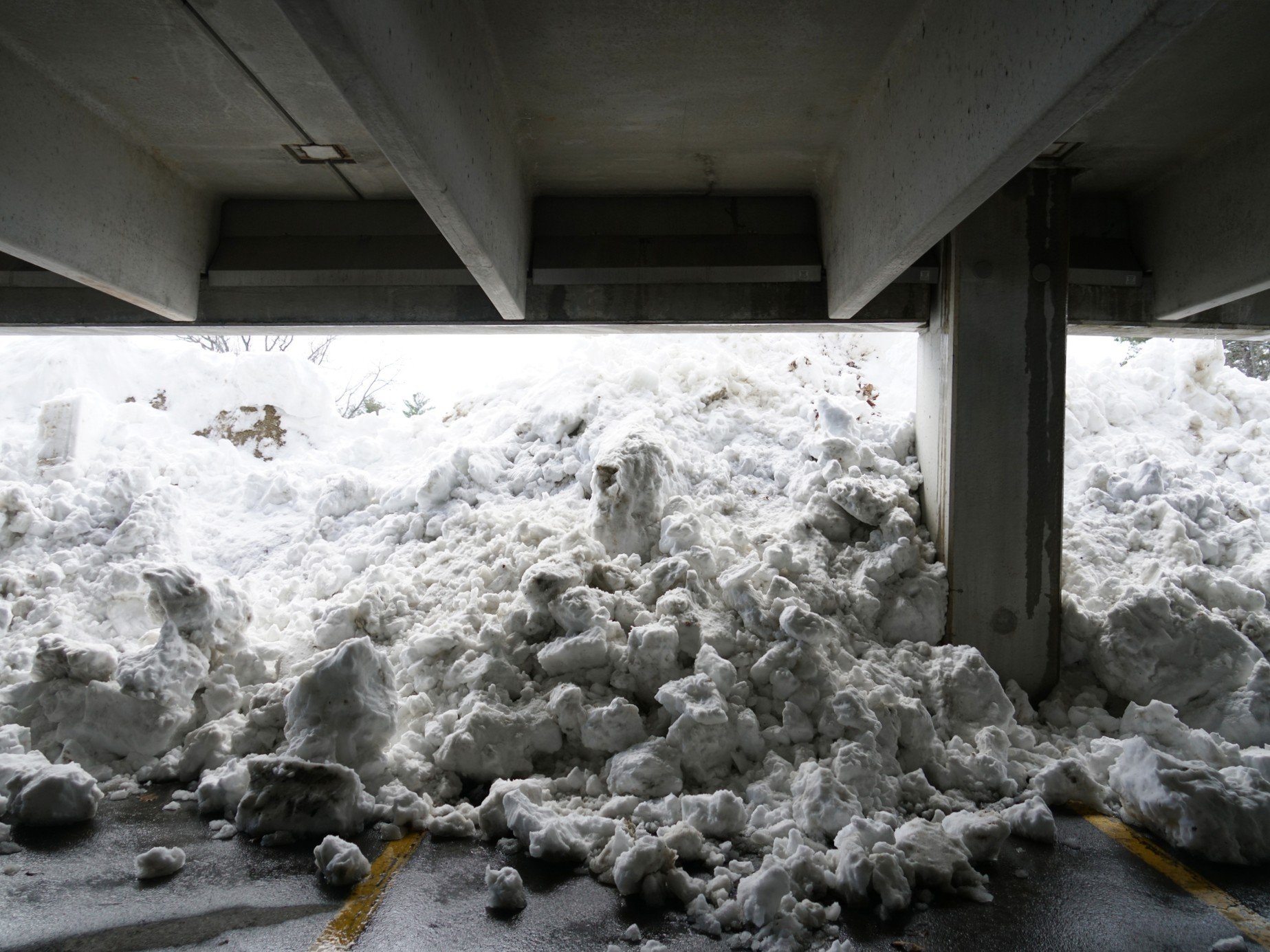
Confirm how snow will be removed before the first storm. Plow blades with rubber or polyurethane edges help protect coatings and joints. Designate snow storage areas carefully, since large piles add significant weight to elevated decks. Check with your coating manufacturer that the deicers you plan to use are compatible with your coating system.
After Storm Season in Warmer and Coastal Regions
In warmer and coastal regions, the fall checklist looks a little different. Wind-driven rain during storm season can open new paths for water through joints, sealants and coatings. Drains may be clogged with storm debris. In coastal areas, look for rust staining at exposed edges, barrier cables and railings, a sign that salt air is reaching steel. Addressing these now keeps minor storm damage from becoming a long-term problem.
What to Fix Now, What to Manage and What to Plan
Not everything you find needs to be repaired before winter. A simple way to prioritize what you find:
Fix now: anything that poses a safety risk, such as loose overhead concrete, trip hazards or damaged barriers, and anything actively letting water in, such as failed joints, failed sealants and clogged drains.
Manage in the meantime: when a full repair has to wait, interim measures reduce the risk. These include removing loose concrete, barricading affected areas, installing temporary shoring where an engineer directs, cleaning drains, resealing failed joints and monitoring conditions through the season.
Plan for next season: larger repairs, such as coating replacement or structural repairs, should be documented and added to the capital plan so they are scheduled rather than deferred indefinitely.
Whatever you find, document it with photos and locations. Comparing conditions year over year shows which problems are stable and which are progressing, which is often the most useful information when setting priorities.
From Checklist to Results
For owners managing multiple parking garages, a pre-winter walkthrough at every site is a good start. The harder part is making sure what gets found actually gets fixed, in the right order and on time. We often see priorities lost in the handoffs between separate assessment, design and construction firms.
The Restocon Integrated Asset Program (RIAP) is designed to close that gap. It connects condition assessment, independent engineering, preventive maintenance, capital planning and coordinated execution, so the issues identified each fall are carried through to completed work in the field.
Managing more than one parking garage? Schedule a discovery call to learn how RIAP can help keep your portfolio ready for every season.