
Planning for What's Coming: A Capital Phasing Guide for Parking Asset Owners
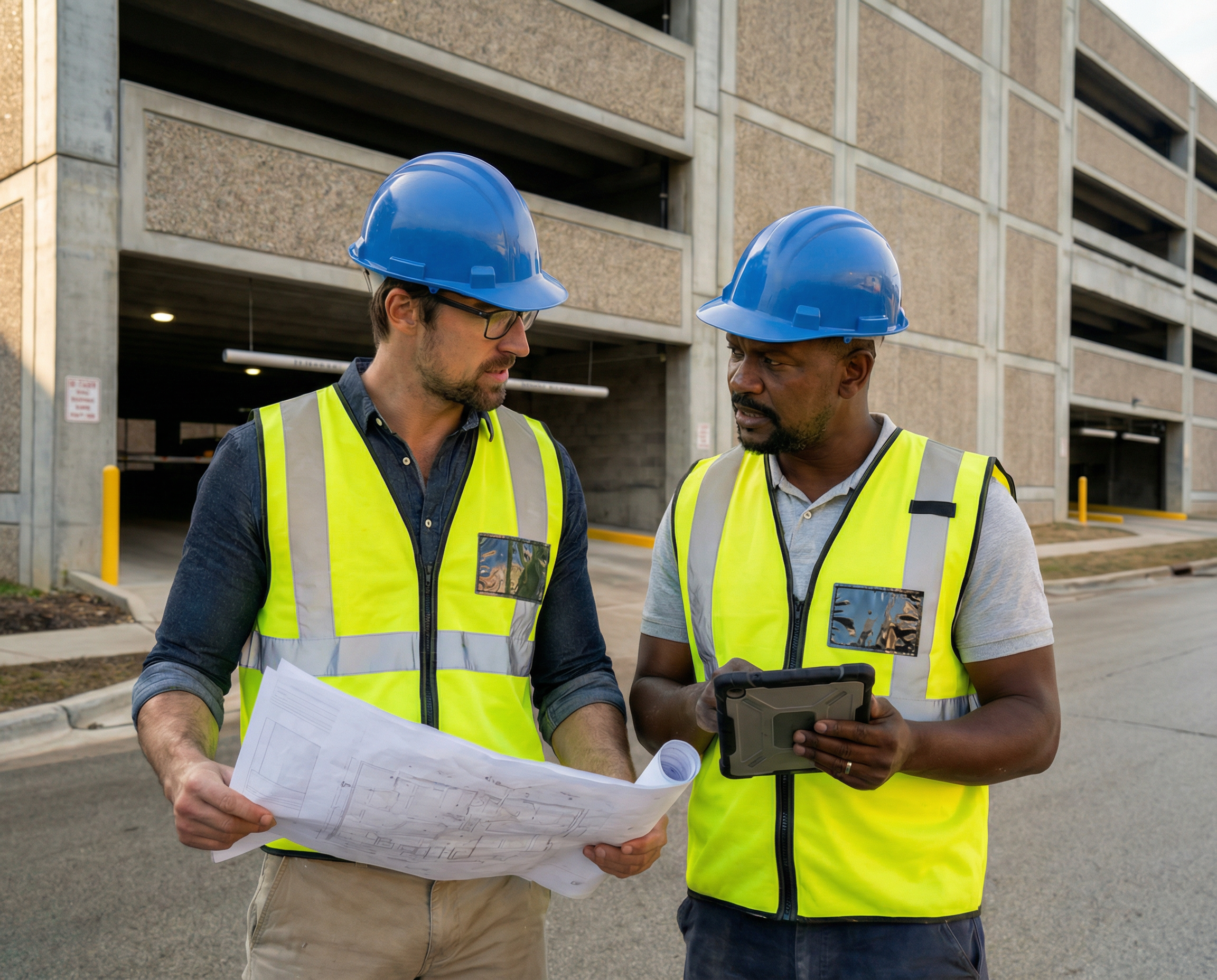
Every parking structure has a repair or restoration bill coming. The question is not whether the work will need to be done - it is whether the owner will be ready for it when it arrives.
Capital phasing is the practice of planning and sequencing restoration work across multiple budget cycles in a deliberate, prioritized order. Done well, it transforms what could be a financial shock into a manageable, predictable program. It also produces better outcomes for the structure itself, because restoration work performed in the right sequence is more effective and longer lasting than work done reactively in the wrong order.
Why Sequence Matters
Not all parking garage repairs are created equal, and the order in which they are performed has a direct impact on the value of the investment. Waterproofing, for example, should be addressed before surface concrete restoration in most cases — because water intrusion is often the root cause of concrete deterioration. Repairing concrete without addressing the source of moisture means the same damage will return.
Similarly, joint sealant work should be sequenced with traffic coating rather than treated as separate projects, so that finished surfaces are not disturbed by subsequent repairs. Post-tension cable repairs need to be coordinated carefully with surrounding concrete work. These interdependencies are not complicated once you understand them, but they require a contractor with deep parking structure experience to plan correctly.
A capital phasing plan accounts for these relationships from the start — ensuring that each phase of work builds on the last rather than undermining it.
Starting With the Right Data
A capital phasing plan is only as good as the condition data behind it. Without a current, thorough assessment of the structure's condition, prioritization is guesswork. With it, owners can make informed decisions about which elements require immediate intervention, which can be scheduled for future phases and which can be managed through routine maintenance in the meantime.
The assessment becomes the foundation of the plan — a baseline that establishes where the structure is today and a reference point for tracking change over time. Owners who invest in regular condition assessments are rarely surprised by their parking assets. Those who don't often are.
Building the Plan
A well-constructed capital phasing plan typically covers a three to five year horizon and addresses several key questions: What work is urgent and cannot be deferred without accelerating deterioration? What work is important but can be responsibly scheduled for a future cycle? What is the correct sequence for the work that needs to happen? And what does routine maintenance between phases need to look like to protect the investment?
Answering those questions honestly - with the input of a qualified specialty contractor - gives ownership and finance teams the information they need to budget responsibly, avoid surprises and make the case internally for proactive investment rather than reactive spending.
The Financial Case for Phasing
The financial argument for capital phasing is straightforward. Restoration work performed proactively, in the right sequence and at the right time, costs significantly less than the same work performed in response to structural failure. Emergency repairs carry premium costs. Structural failures can trigger liability exposure. And the cumulative effect of deferred maintenance - allowing minor deterioration to become major damage - consistently produces repair bills that dwarf what proactive intervention would have cost.
Capital phasing is not just a planning tool. It is a risk management strategy that protects the long-term value of a significant asset.
A Partner for the Full Lifecycle
Executing a capital phasing plan effectively requires a contractor who can see the full picture - assessment, planning, phased execution and ongoing maintenance between cycles. Restocon has specialized exclusively in parking garage repair, restoration and waterproofing since 1997. Through the Valcourt Group's national network, we support clients from initial assessment through long-term asset protection, providing the continuity of expertise that capital phasing requires.
If you are managing parking assets and want to move from reactive repairs to a structured, predictable restoration and maintenance program, we welcome the conversation.
Contact us today.